What is SD?
SD describes devices that conform to SD standards for non-volatile memory cards. See the SD Association website for details.
Shop Best Buy for memory card readers or memory card adapters that work with your type of memory card. Buy Card Reader Mac on the internet! Browse our extensive catalog of Card Reader Mac in stock online. Card Reader Mac for sale on eBay.
Are there size limitations for the cards that can be inserted into the SD slot?
Yes. The SD card specification for a memory card is 32mm by 24mm by 2.1mm. You can also use thinner cards, such as MultiMediaCards (MMC). Avoid using cards that have a thickness greater than 2.1mm, as they might damage the SD card slot if you try to insert them.
Which SD card formats work in the SD card slot?
Cards that conform to the SD 1.x, 2.x, and 3.x standards should work. The SD card slot can use:
- Standard SD, 4MB to 2GB
- SDHC (Secure Digital High Capacity), 4GB to 32GB
- SDXC, 4GB to 2TB
- MMC (MultiMediaCards)
- UHS‑II, up to 2TB (iMac Pro only)
You can use a passive adapter like the one shown here to make MiniSD, MicroSD, and higher density formats like MiniSDHC and MicroSDHC conform to the width and thickness specifications listed above:
How fast can my Mac read or write to an SD card in the SD card slot?
Mac notebooks use the USB bus to communicate with the SD card slot. They have a maximum speed of up to 480Mbit/s. Mac desktops use the PCIe bus to communicate with the SD card slot. Desktops can transfer data at a faster rate.
Check the packaging that came with your SD media to determine the maximum transfer rate that your specific card uses.
To determine the maximum transfer speed of your Mac, you can use System Information. Choose Apple () menu > About This Mac and then click System Report.
If you use a Mac notebook:
- Select Hardware, then select USB.
- Select Internal Memory Card Reader and look for the Speed entry.
If you use a Mac desktop computer:
- Select Hardware, then select Card Reader.
- Look for the Link Speed entry. Computers that use the PCIe bus express their speed as GT/s.
Does the SD slot work with cards that exceed 32GB?
Yes. However, most media manufacturers preformat the media using common block-and-cluster sizes that don’t approach the theoretical limits of a given file system.
Most SD cards use the FAT32 file format, and preformatted FAT32 SD media is commonly available up to a capacity of 32GB. Media that exceeds 32GB usually uses the exFAT file system, while some smaller capacity cards use the FAT16 file format. Preformatted FAT16 media is generally available up to a capacity of 2GB. https://rewardlucky.netlify.app/newsgroup-reader-for-mac-os-x.html.
If you use OS X Snow Leopard 10.6.5 or later, you can find out which file system you’re using:
- Insert the media into the SD card slot.
- Choose Apple menu > About This Mac.
- Click System Report.
- In the Hardware section, click Card Reader, and find the File System field.
Will the SD card slot work with SD cards that use the exFAT file system?
Memory Card Reader And Storage
Yes. Any Mac that has an SD card slot and is running OS X 10.6.5 or later can use the exFAT file system.
exFAT is also supported in Boot Camp with Windows 7, 8.1, or 10 on any Mac made in 2011 or later with an SD card slot.
How do I insert media into the SD card slot?
When you insert the card, make sure that the metal contacts face down and point toward the computer. Don’t force media into the SD card slot, as this might cause damage.
How does my Mac use the media inserted into the SD card slot?
Your computer recognizes a card inserted into the SD card slot as a USB storage device. You can mount, read from, and write to the SD card just like you can with any other USB storage device.
I put the card in the slot, but it didn’t mount. What should I do?
Remove the card and insert it again. Sometimes the SD card won’t mount properly if you put it into the slot too slowly.
When I try to write content to the card, I get a 'cannot be modified' message. How can I fix this?
You see this message when you try to edit data on an SD card that’s locked. You need to use the lock slider to unlock the card before you can edit the data.
To eject the card, drag the icon that represents the card to the Trash. After the icon disappears from the desktop, you can remove the card from the computer. Adjust the lock slider tab to unlock the card, then reinsert the card into the slot. See the manufacturer’s instructions for the location of the slider tab.
Can I use Disk Utility to reformat an SD card?
You can use Disk Utility to partition and format an SD device as FAT32 (using the MS-DOS FAT setting) or Mac OS Extended. The Mac OS Extended format can be used only on Macintosh systems. Non-Apple systems won’t recognize cards formatted to Mac OS Extended.
You might have to format a card that’s larger than 32GB with exFAT if you want to use it with a digital camera, GPS, or another device. When in doubt, format the card in the device that you intend to use it with.
Can I install macOS on an SD storage device and use it as a startup volume?
Use Disk Utility to change the default partition table to GUID. Then format the card to use the Mac OS Extended file format.
How do I remove a card from the SD card slot?
Before you remove the card, allow any data transfer to SD media to complete. To eject the card, drag the icon that represents the card to the Trash. After the icon disappears from your desktop, you can remove the card from the slot.
Don't remove a card while your Mac is sleeping, as this could lead to data loss. Always wake your computer and eject the SD card before removing it from your Mac.
Can I use Secure Digital Input Output (SDIO) cards?
Can I use macOS to see the specifications for the interface hardware and media inserted in the SD card slot?
You can get information about the interface hardware and the media that you inserted in the slot from the System Information:
- Choose Apple menu > About This Mac.
- Click System Report.
- In the Hardware section of System Information, select USB.
- In the list of USB devices, select Internal Memory Card Reader to access information about the interface hardware and the media inserted into the SD card slot.
Can I use the SD card slot while running Windows using Boot Camp?
The SD card slot works with Boot Camp in all supported versions of Windows. You’ll need to download and install the Windows Support Software to use the SD card slot with Windows.
Learn more about using Windows on a Mac.
Can I use an SDXC card on my Mac with Windows?
You can use an SDXC card in Windows 7, Windows 8, and Windows 10 with these Mac computers:
- MacBook Pro (Early 2011 and later)
MacBook Pro models from 2016 and later don't have a built-in SD card slot. You can use a USB-C card reader, or a combination of a USB-C to USB Adapter and a USB card reader. - MacBook Air (Mid 2011 and later)
- Mac mini (Mid 2011 and later)
Mac mini (Mid 2010) doesn't support SDXC cards. - iMac (Mid 2011 and later)
iMac (Mid 2010) doesn't support SDXC cards.
Can I use an SD, SDHC, or SDXC card to install Windows on my Mac?
No. You can’t use SD, SDHC, or SDXC cards with Boot Camp to install Windows software on Mac computers.
The lack of an SD card slot on the 2016 and 2017 MacBook Pro is an inconvenience for photographers of all stripes who shoot with cameras other than the iPhone. The answer—as with everything else that needs to connect to the USB-C–only MacBook Pro—is an external USB-C SD card reader.
But which one? As you would expect, third parties have rushed to create adapters for everything, including memory card readers. And to no one’s surprise, the quality, specifications, and prices are all over the map.
We tested six adapters that stood out among the field based on online reviews, word of mouth, and design. All of the adapters read and write to SD cards, and we tested one model—the IOGEAR USB-C 3-Slot Card Reader/Writer—that also accepts larger CompactFlash (CF) cards still used by some high-end cameras. Choosing which reader is best for you depends a lot on what you need and how much you’re willing to spend. For most people, that could turn out to be one of the least expensive of the bunch.
Before you view the picks, you may want to consult our SD Card explainer to understand the stew of acronyms and jargon the industry uses to describe memory card storage and speed.
Best card reader for speed
The SanDisk Extreme Pro UHS-II USB-C Reader is pricey ($49 on Amazon, and unlike the other adapters we tested, it has just a single SD card slot—no microSD, CF, or USB-A ports to extend its versatility.
But it’s fast.
On one hand, the speed is due to its UHS-II compatibility, transferring up to a theoretical 312 MBps from UHS-II memory cards that include a second row of contacts from which to read data. https://luckywhole.netlify.app/best-external-card-reader-for-mac.html. In our real-world tests, we recorded an average throughput of 195.45 MBps for photos and 267.67 MBps for video; the latter’s increase is due to the reduced amount of overhead needed to copy nine files versus 684 files.
That said, even when copying from more common UHS-I cards, which top out at a theoretical speed of 104 MBps, the SanDisk Extreme Pro UHS-II USB-C Reader bested the other adapters we tested. It copied our suite of photos at a rate of 86.68 MBps and video at 101 MBps.
We also liked the fairly compact design, with its bendy neck and minimal footprint, although the angle of the case where you insert the SD card makes extracting a card less elegant than needed.
But if you’re shooting with a camera that works with UHS-II cards and you need the fastest copy turnaround, the cost is worth it.
Best value for UHS-II cards

If you’re willing to give up a few seconds and don’t want to pay a premium for speed, the Verbatim USB-C Pocket Card Reader is nearly as fast as the SanDisk Extreme Pro when copying from UHS-II cards and costs just $17 on Amazon.
In our testing, we found an average throughput of 179.36 MBps for photos and 221.89 MBps when transferring video files. The Verbatim reader is a little more bulky, and sports a short cable for the USB-C plug, but it also features slots for SD and Micro SD cards.
Best combination of price and performance
What if, like most current photographers, you’re not yet capturing to UHS-II cards? Ebook reader for mac sync across devices. For an adapter that has a great combination of price and performance, we like the Cable Matters USB 3.1 Type-C Dual Slot Card Reader ($12 on Amazon).
We expected to run into tradeoffs at this price, but the Cable Matters adapter was almost as fast as the SanDisk adapter. Our photos transferred at 82.17 MBps, while videos zipped along at 95.6 MBps.
The adapter has dedicated SD and microSD card slots that can be used simultaneously, and a discrete LED to indicate the adapter is getting power. With dimensions of just 2.8 x 5.4 x 0.5 inches and a 6-inch cable, it doesn’t add bulk to any bag.
Pdf reader for mac foxit phantom. If you don’t need UHS-II compatibility, the Cable Matters USB 3.1 Type-C Dual Slot Card Reader is the one to get.
How we tested
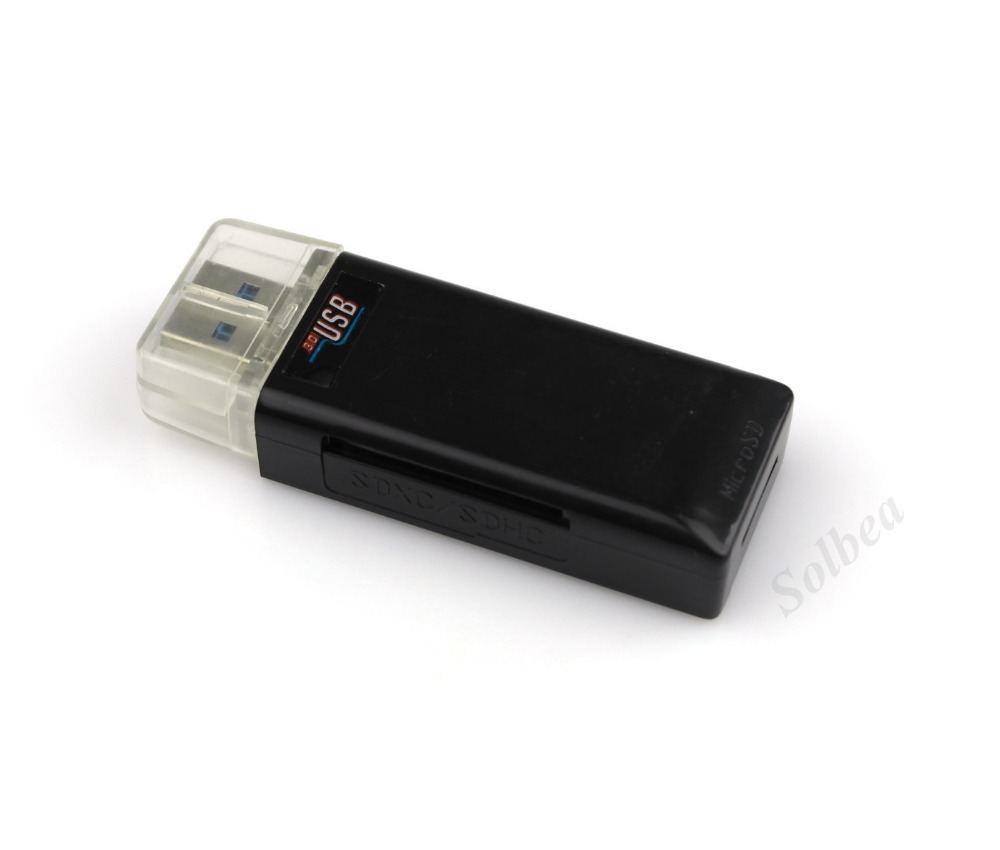
Memory Card Reader Windows 10
We copied two sets of photos and videos from a SanDisk Extreme Pro SDXC card rated at 95 megabytes per second (MBps). For photos, we timed three transfers of 12.9GB of JPEG and raw images (684 files) and averaged the results. For video transfer, we copied 31GB (9 files) from the same card.
Iogear 56-in-1 Memory Card Reader And Writer
We also copied the same files using a SanDisk Extreme Pro SDHC UHS-II card rated at 280 MBps to test the difference that UHS II compatibility affords. And for the CF reader, we used a SanDisk Extreme CF card rated at 120 MBps (UDMA 7) to copy 7.7GB of JPEGS (402 files), since that card’s capacity maxed out at 16GB.
All of the testing was done on a 2016 MacBook Pro with TouchBar equipped with a 2.7GHz Intel Core i7 processor, 16GB of RAM, and a 1TB SSD. We used the Image Capture utility to facilitate the transfer of photos, and copied the video files using the Finder.
Bottom line
If you really need the top speeds afforded by UHS-II cards and devices that read them, we recommend the SanDisk Extreme Pro UHS-II USB-C Reader. For everyone else, however, our favorite USB-C memory card reader is the Cable Matters USB 3.1 Type-C Dual Slot Card Reader. It’s fast, small, and inexpensive—the attributes you want so you can spend your time and money on capturing photos.
To read the full reviews of each product we tested, click the product name in the list below, and then click the “Read the full review” link that appears.